

By David Quezada, owner of Four Roots Air Solutions, Loomis, CA | CSLB #1147036
Short answer: A Stockton apartment complex called us for a blocked evaporator coil. On the roof, we found the coil was only part of the problem: the units were packed so tightly that a proper coil cleaning would have been extremely difficult, and the existing ductwork was leaking. The customer chose a long-term fix instead of a hard repair. We installed a new unit relocated 10 feet back to create service clearance for both units, and replaced the ductwork with R-8 duct in 24-gauge KD pipe for exterior protection.
Key takeaways
- The service call identifies the immediate problem. The site conditions decide whether the repair is practical.
- Rooftop units that are crowded together are harder and more expensive to clean, inspect, and repair.
- Relocating a unit can solve a service access problem for more than one piece of equipment.
- Exterior ductwork on a roof needs both insulation and physical protection from the weather.
- For property managers, the real question is not only whether equipment runs today, but whether a technician can safely service it next time.
The call: a blocked evaporator coil
The original service call was straightforward on paper: a blocked evaporator coil on one of the complex’s rooftop units. A blocked coil restricts airflow, and the usual answer is a thorough cleaning.
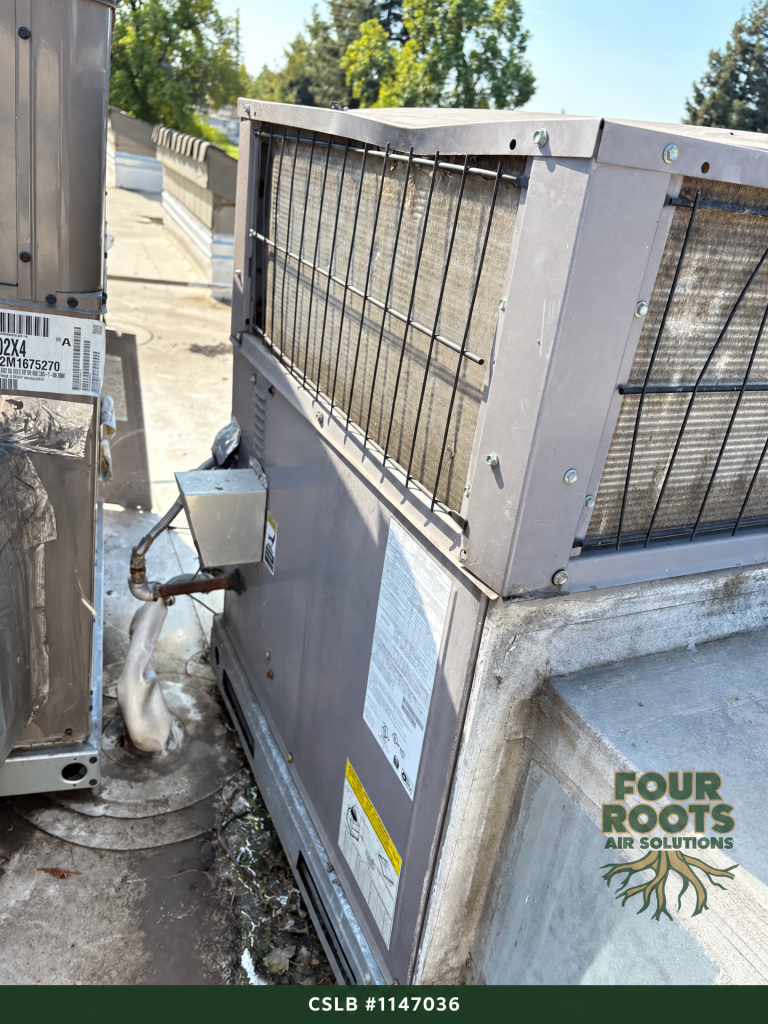
Once we were on the roof, it was clear the coil was not the whole story. The equipment layout left very little room to work around the unit, which made a proper coil cleaning extremely challenging.
What we found on the roof
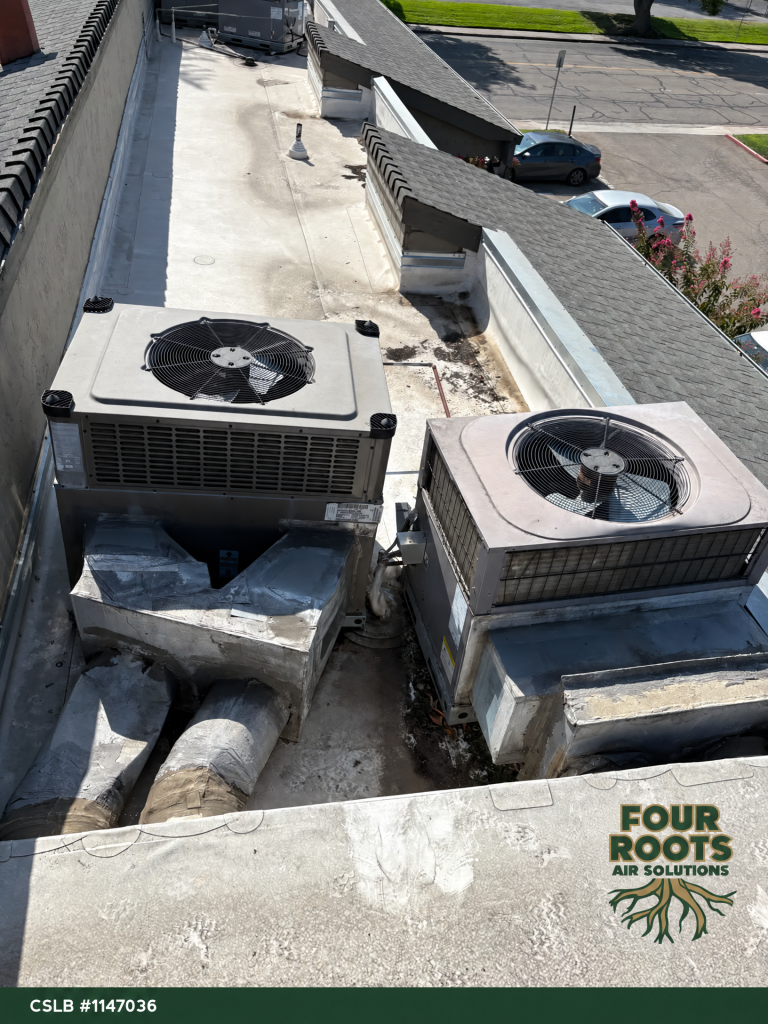
Two problems stood out.
1. Almost no service clearance
The existing units sat close together with very little working room between them. Every service task gets harder when a technician cannot get to the panels, the coil, or the connections. A cleaning that should be routine becomes slow, awkward, and less thorough than it should be. That problem does not go away after one visit. It comes back on every maintenance call for the life of the equipment.
2. Leaking ductwork
The existing ductwork also had leaks. On a rooftop, leaking supply ducts lose conditioned air outdoors before it reaches the apartments, and leaking return ducts pull in outside air the unit then has to condition. Duct leaks on a roof also tend to get worse with sun and weather exposure.
The options: force the repair, or fix the layout
The customer had a choice. One path was to work through the existing layout, attempt the coil cleaning in very tight quarters, and patch the duct leaks. The other was to rethink the layout so the equipment could be serviced properly going forward.
The customer chose the better long-term path.
The solution: relocate the unit and rebuild the ductwork
A new unit, relocated 10 feet back
We installed a new unit and relocated it 10 feet back from its original position. That move created service clearance for both units, not just the new one. Technicians can now reach the equipment from the sides that matter, which makes cleaning, inspection, and repair practical instead of a struggle.
New ductwork built for the roof
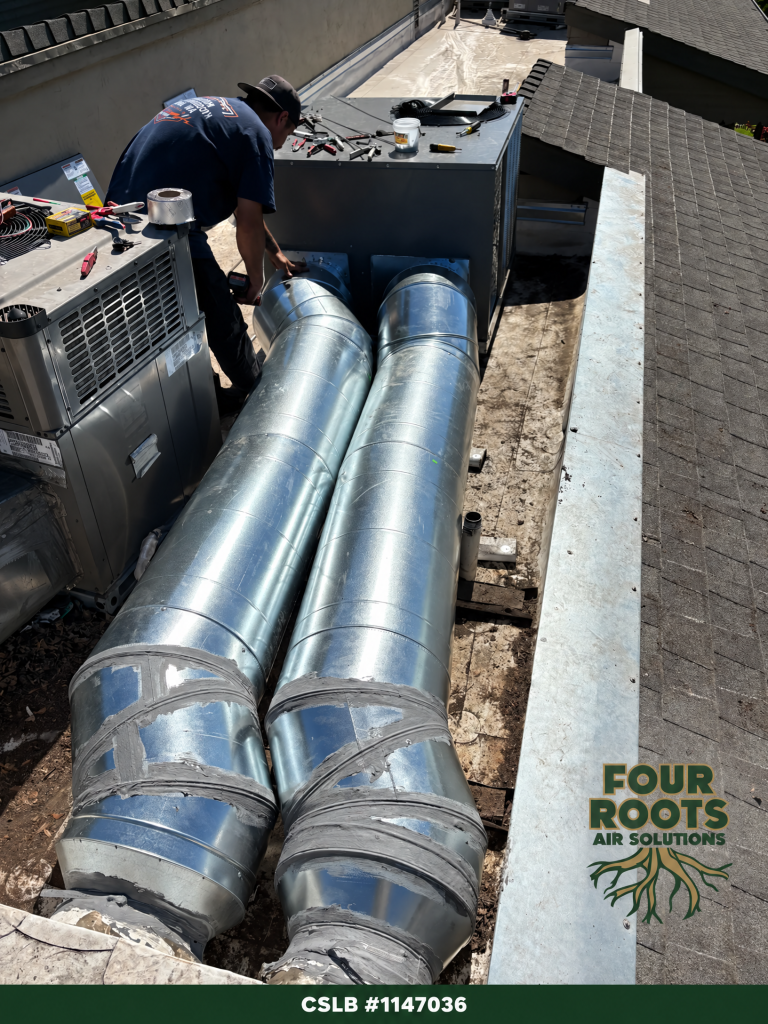
With the unit in its new location, the supply and return ducts had to be rerouted. We installed R-8 ductwork in 24-gauge KD pipe. The R-8 insulation handles the thermal side, keeping the conditioned air from picking up or losing heat on the way to the building. The 24-gauge KD pipe jacket gives the duct physical protection from sun, weather, and roof traffic.

The finished layout: the new unit in its relocated position, clear working space around both units, and the new duct runs connected and protected.
Why service access matters for apartment properties
For a property manager, an HVAC decision is not just about whether the equipment runs today. It is about what every future service call will cost and how well that work can actually be done.
When a technician cannot safely reach, inspect, clean, and repair a unit, maintenance gets skipped, rushed, or billed for extra time. Small problems like a dirty coil turn into bigger ones. Building service access into the layout up front pays off on every visit after that.
This job was not a quick equipment swap. It was a rooftop reconfiguration built around service access, duct integrity, and the practical reality of future maintenance.
Frequently asked questions
What causes a blocked evaporator coil?
Dirt and debris build up on the coil over time, especially when filters are not changed regularly or the coil is hard to reach for routine cleaning. A blocked coil restricts airflow through the system.
Why does rooftop service clearance matter?
Technicians need room to open panels, reach the coil, and work on electrical and refrigerant connections. When units are crowded together, every service task takes longer, costs more, and is harder to do thoroughly.
Can a rooftop unit be moved when it is replaced?
Often, yes. Replacement is a good time to look at whether the existing location still makes sense. Moving a unit usually means rerouting ductwork and connections, so it should be planned as part of the project, not as an afterthought.
What is the point of putting rooftop ductwork in metal pipe?
Insulation alone does not stand up well to sun, weather, and foot traffic on a roof. A metal jacket protects the insulated duct so it keeps doing its job.
Managing a property with hard-to-service rooftop equipment?
If your rooftop units are crowded, difficult to clean, or connected to leaking ductwork, the next service call is a good time to look at the bigger picture. Four Roots Air Solutions evaluates both the equipment and the site conditions so the fix makes sense long term.
Call (916) 664-4843 or request service from Four Roots Air Solutions to schedule a rooftop equipment assessment.
Based in Loomis, CA, and serving Sacramento, Stockton, Placer County, and surrounding areas.
Four Roots Air Solutions | CSLB #1147036
Leave a Reply