
By David Quezada, owner of Four Roots Air Solutions, Loomis, CA | CSLB #1147036
Short answer: If your home is still hot, uneven, or uncomfortable after a new air conditioner was installed, the outdoor unit may not be the problem. An outdoor condenser that is not matched to the indoor air handler, return ducts pulling in attic air, supply ducts leaking cooled air, and missing duct insulation can all keep a brand-new AC from making the house comfortable. The fix starts with evaluating the whole system, not just the equipment outside.
Key takeaways
- A new outdoor unit does not fix a mismatched indoor air handler or failing ductwork.
- Return duct leaks pull hot attic air into the system. Supply duct leaks dump cooled air into the attic.
- Duct sealing and duct insulation solve different problems. A sound duct system needs both.
- An AHRI-matched system confirms the equipment pairing. It says nothing about the condition of your ducts.
- Repairs should be verified with airflow, static pressure, and duct leakage testing.
A new condenser on an old system: what we found
Four Roots Air Solutions was called to investigate a homeowner’s ongoing comfort complaints. A previous contractor had already replaced the outdoor unit, but the house still was not comfortable.
Our equipment and system survey found that the contractor had installed a new R-410A condensing unit while leaving the original R-22 air handler and the failed ductwork in place.
Rather than treating the complaint as a single equipment problem, we evaluated the entire system: the equipment producing the cooling, the return path bringing air back, and the supply ducts delivering conditioned air to the rooms.
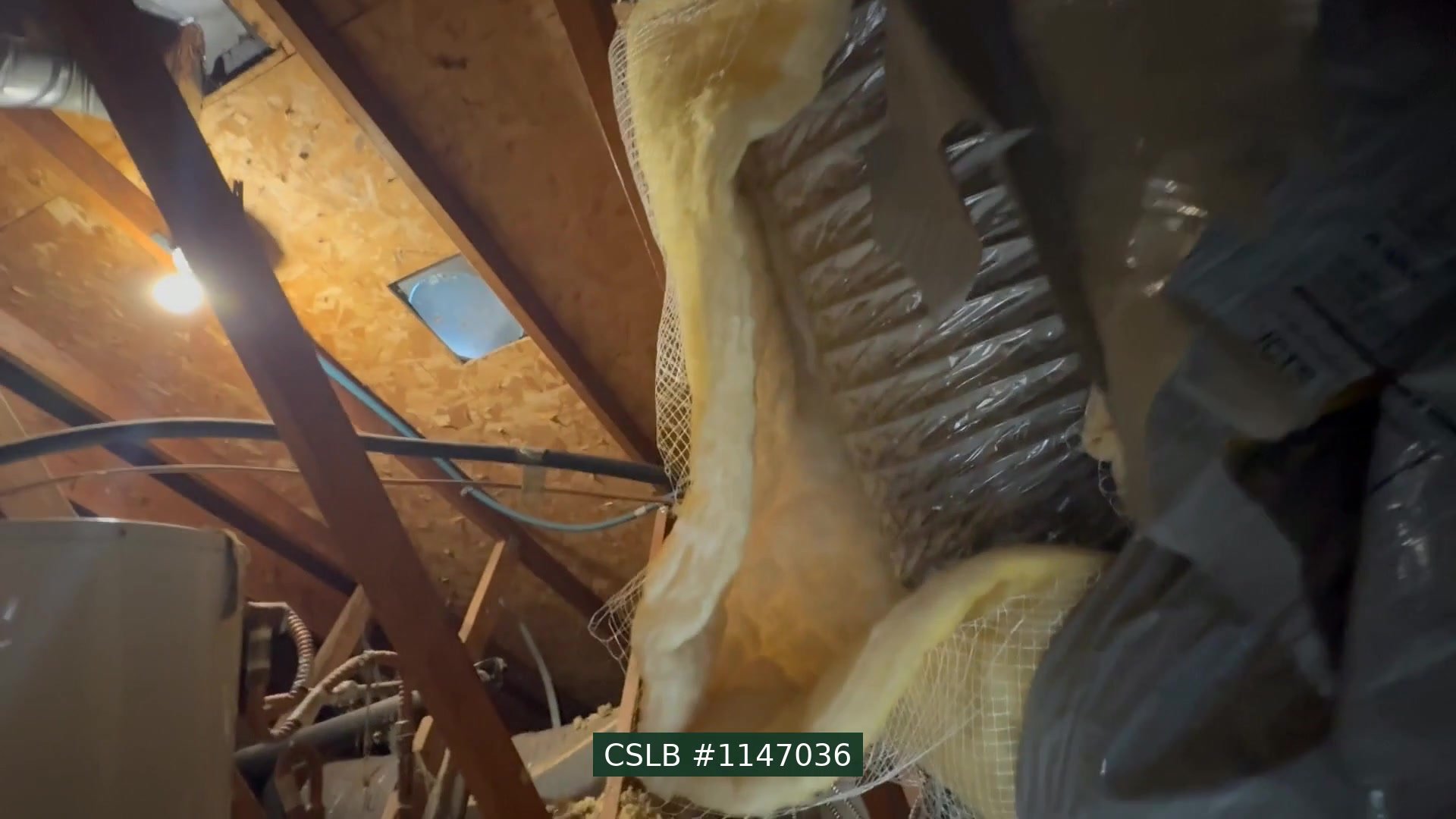
The inspection video shows torn duct jackets, exposed insulation, and sections where duct insulation is missing or pulled away. Those visible conditions were only part of what our survey uncovered.
Can you pair a new R-410A condenser with an old R-22 air handler?
It is a mismatch, and it is one of the most common shortcuts we see after an AC replacement.
R-410A systems operate at higher pressures than R-22 systems, and many older R-22 indoor coils and metering devices were not designed or rated for R-410A. Even when the tonnage looks right on paper, an outdoor unit and indoor unit that were never tested together do not have a certified capacity or efficiency rating as a system.
Matching equipment is not just about installing components with the same nominal tonnage. The outdoor condensing unit and the indoor coil or air handler need to be a compatible, rated combination.
Why is my house still hot after a new AC? Three ways the ductwork was working against comfort
1. Return duct leakage was pulling attic air into the system
The return side is supposed to bring air from inside the home back to the air handler. In this house, leaks on the return side were drawing attic air into the system instead.
In summer, attic air in the Sacramento Valley can be far hotter than the air inside the house. Every cubic foot of that air adds heat the equipment has to remove before it can cool the living space.
2. Supply duct leakage was losing cooled air before it reached the rooms
We also found substantial supply air loss. Air the system had already cooled was escaping into the attic instead of reaching the rooms where the homeowner needed it.
This is why a running air conditioner and a comfortable home are not the same thing. Producing cool air is only half the job. Delivering it matters just as much.
3. Missing duct insulation allowed heat to soak through the ducts
Long runs of uninsulated ductwork created a separate problem from leakage: heat transfer through the duct surfaces.
In a hot attic, cooled air picks up heat as it travels through uninsulated ducts. In heating season, warm supply air loses heat to the cold attic. This is sensible heat gain or loss, a change in air temperature that happens even when no air is leaking out.
Sealing and insulation solve different problems. Sealing keeps the air in the ducts. Insulation keeps the temperature of that air from changing on the way. A sound duct system needs both.
What does an AHRI-matched system mean?
An AHRI certificate identifies a specific indoor and outdoor equipment combination and its certified performance ratings, including capacity and efficiency. It is the standard way to confirm that an outdoor unit and air handler are a tested, rated match.
What an AHRI certificate does not do is certify the condition of the installed ductwork or guarantee comfort in the home. Properly matched equipment is essential, but it cannot make failed ducts perform.
Our repair plan: fix the equipment and the air delivery system together
We located an old-stock R-410A air handler that forms an AHRI-matched combination with the existing outdoor unit. Most new split systems now ship with lower-GWP refrigerants such as R-454B or R-32, so matching R-410A indoor equipment is increasingly hard to find.
The planned correction is to:
- Install the AHRI-matched R-410A air handler.
- Replace the failed ductwork with properly sealed and insulated ducting.
This is the diagnosis and repair plan, not a completed-project result. The goal is to correct the equipment mismatch, the return-side attic air, the supply leakage, and the heat transfer together, rather than leave part of the problem behind.
How should duct and equipment repairs be verified?
After corrective work, performance should be checked with proper startup procedures, airflow measurement, static pressure readings, and duct leakage testing. Those measurements are how a repair plan becomes a documented result instead of a guess.
Frequently asked questions
Why is my new air conditioner not cooling my house well?
Common causes include an outdoor unit that is not matched to the indoor air handler, leaking return or supply ducts, missing or damaged duct insulation, and poor airflow. A new outdoor unit cannot correct any of these on its own.
How do I know if my ductwork is leaking?
Warning signs include rooms that never reach the thermostat setting, a hot or dusty attic smell from the vents, high utility bills, and torn, crushed, or disconnected ducts in the attic. A duct leakage test measures how much air the system is actually losing.
Should I replace my ducts when I replace my AC?
Not always, but ducts should be evaluated every time equipment is replaced. If the ducts are leaking, uninsulated, or undersized, a new system will be limited by them.
Is a bigger AC the fix for a house that won’t cool down?
Usually not. If the real problem is duct leakage, missing insulation, or mismatched equipment, a larger unit adds cost without fixing the cause and can create new problems such as short cycling and poor humidity control.
Still uncomfortable after replacing your AC?
Before assuming you need a bigger unit or another equipment replacement, have the entire system evaluated. Persistent comfort problems can come from the equipment, airflow, duct leakage, insulation, or several of these at once.
At Four Roots Air Solutions, we look beyond the outdoor unit to understand what is happening throughout the system.
Call (916) 664-4843 or request service from Four Roots Air Solutions to schedule a full-system evaluation.
Based in Loomis, CA, and serving Sacramento, Placer County, and surrounding areas.
Four Roots Air Solutions | CSLB #1147036
Leave a Reply